

The vast archipelago of Indonesia's 17,000 islands spans 5,000 kilometers and sits at the intersection of the Asian and Australian continental plates. It is one of the most biologically rich countries on Earth, spanning the famous Wallace Line that separates Asian and Australasian fauna. One of Indonesia's five main islands is New Guinea (shared with Papua New Guinea), and that is the focus of our West Papua birding tour.
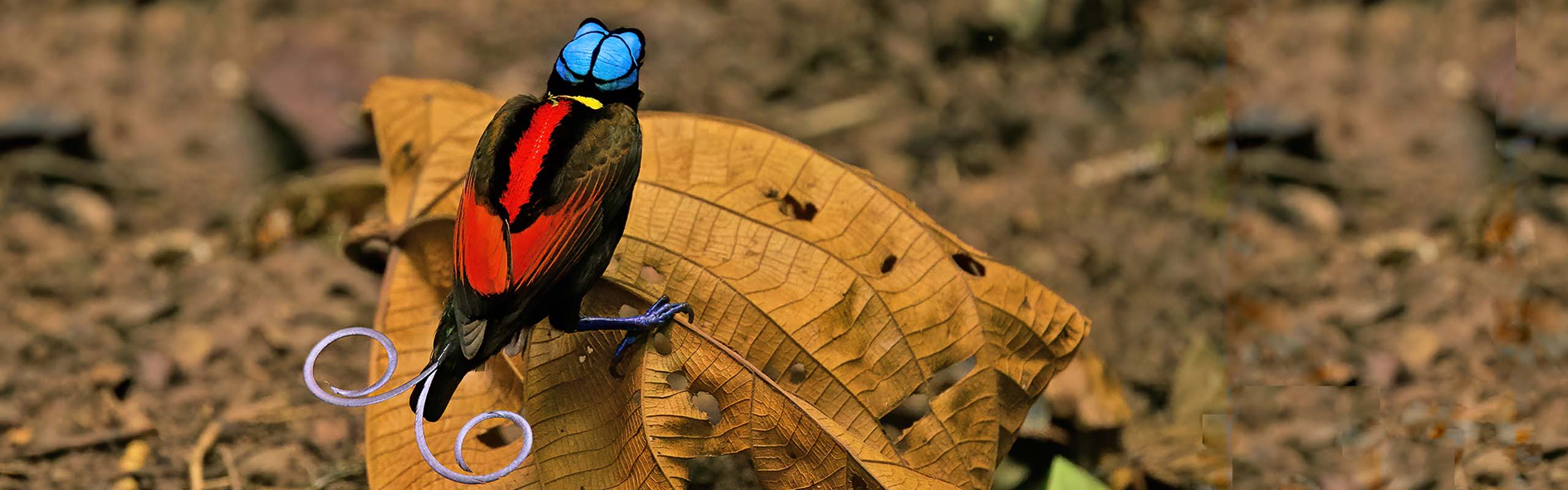
This is a new offering for Field Guides. Previously, we had felt it was too challenging and basic for our clients, but things have improved a lot recently, and the simple lodges are far better. Many wonderful bird species now have blinds set up for our viewing, and the local guides are excellent, so we are in good hands. There are key birds in each area for us to seek. The endemics on the island of Biak include Biak Scops-Owl, Biak Paradise-Kingfisher, Biak Hooded Pitta, Biak Coucal, Biak Monarch, and Biak Leaf Warbler. Nimbokrang offers Pale-billed Sicklebill, Twelve-wired and King birds-of-paradise, Magnificent Riflebird, and Blue-black Kingfisher. The Arfak Mountains have Vogelkop Lophorina, Long-tailed Paradigalla, Western Parotia, Vogelkop Bowerbird, Masked Bowerbird, and Papuan Lorikeet among many others. And the lowland areas can give us Northern Cassowary, Red-breasted Paradise-Kingfisher, and Black Lory plus a chance for the rare Long-beaked Echidna, while Waigeo has Wilson's and Red birds-of-paradise and Western Crowned-Pigeon. We do not visit the Snow Mountains due to security concerns, but all the other major endemic-rich areas are included in our itinerary. We expect to see many endemics and of course the beautiful birds-of-paradise.
Special notes on the tour
This is not an easy tour, but it visits some wonderful sites. It is an 18-day birding trip, with moderate to tough trekking. Clients need to be reasonably fit and prepared to rough it in the simple homestay accommodations at some sites, and you need to be ready for hot and humid lowlands and cool wet highlands.
When we're out birding where there are no hotels, we'll stay in local houses where the accommodation is simple and rooms have to be shared; singles will be difficult as the homestays are small. Toilets and washing facilities will be very basic but available in every village where we stay.
We'll be traveling in a developing country, where flight schedules change without notice and forces of nature are powerful. An open-minded and flexible participant attitude towards sudden changes will be helpful. We'll do everything possible to stay on our itinerary, but we may need to adapt and make some changes as we go.
Have we piqued your interest? Then consider joining us for this West Papua adventure.
Select the KEY INFO tab or click here for our itinerary plus space requests, status, fees, limits, and guides for any departure.