

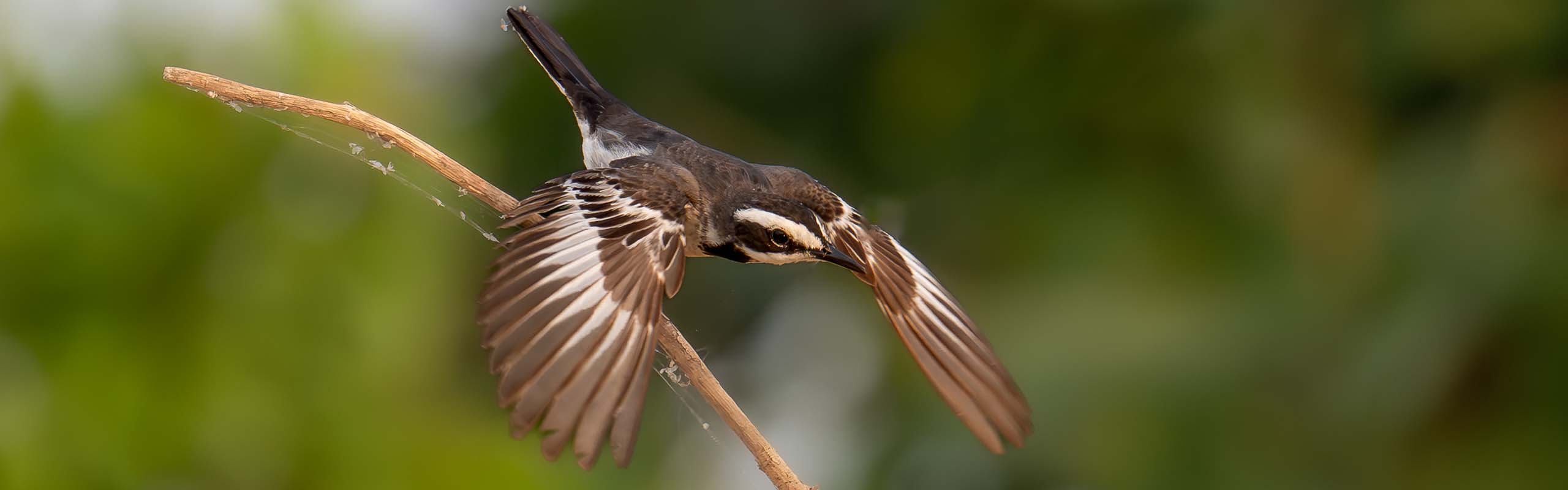
Why Cambodia? Well, Phil and Sue Gregory had heard a lot about it and decided to take a trip there in 2008; it proved to be a fascinating journey combining some wonderful birds with one of the great legendary cultural sites at Angkor Wat and surrounds. Cambodia is what might be described as the "Last Chance to See" destination for mega-rare large waterbirds like Giant and White-shouldered ibises, Spot-billed Pelican, and Greater Adjutant, as well as the endangered Asian taxon of Sarus Crane, Oriental Darter, Lesser Adjutant, Painted and Milky storks, Pied Harrier, Bengal Florican, Asian Golden Weaver, and the recently described Mekong Wagtail. Population pressures, deforestation, and habitat degradation throughout Southeast Asia mean that relatively undeveloped Cambodia is the last or at least a very significant sanctuary for many of the above species.
Surrounded by Thailand, Laos, and Vietnam, Cambodia is a small country with a very turbulent past, most recently while under the murderous tyranny of the Khmer Rouge when millions of people died in forced labor camps in one of the darkest episodes of 20th Century history. But the country and its people have proven amazingly resilient despite all the turbulence, and Cambodia today is a modern Asian-style guided democracy, proud of its ancestral and cultural heritage and custodian of the World Heritage site of Angkor Wat and its many associated temples. The long Buddhist tradition can be witnessed in the polite and respectful nature of the people, and tourists are welcomed and encouraged as a way of providing jobs and income for the still largely agrarian society. Angkor is on the national flag, the national beer, the currency--it's everywhere and is a truly fantastic spectacle--do bring those cameras!
The land is mostly flat with some mountains around the border areas, has a coastline on the Indian Ocean, and is intensively farmed with rice paddies to feed the burgeoning population. Woodland is dry savanna type in the lowlands with scattered deciduous drought-resistant trees, and there are still some quite extensive (albeit disturbed) grasslands and many small wetlands. The cultivated and seasonally irrigated rice paddies are known as trepeangs, and they can be excellent birding habitat.
Our tour is timed to coincide with the end of the dry season (in so far as these things can be predicted these days), with water levels high enough for the breeding storks and herons and roads again accessible.
The cuisine is very simple, with rice and fish dishes predominating, and not too much in the way of spices. Happily, our recent trips found big gastronomic improvement and we enjoyed some nice curries and local meals.
Select the KEY INFO tab or click here for our itinerary plus space requests, status, fees, limits, and guides for any departure.
Client comment
"I enjoyed the tour, which was very much what I was hoping for in terms of timings at each site. I saw slightly more new species than expected, and enjoyed renewing acquaintance with many old favorites. Accommodation and food was consistently good. I had not met guide Phil Gregory before but greatly enjoyed his company as well as his leadership and experience. Phil is a wise and experienced leader, and excellent company. He made the tour a lot of fun, as well as successful from the birding point of view. I would be very happy to go with him again." R.B., CAMBODIA tour participant
"The tour went very smoothly and efficiently. Cambodia was a unique place. I enjoyed being able to see Angkor Wat and walk through it and other temples. The tour manager in the Field Guides office did a great job. We have only traveled with Field Guides on birding trips and this was our 10th trip, so that should tell you how much we like you." K.J., CAMBODIA tour participant