

Not sure which Alaska tour to choose? Click to see a complete listing and comparison of all our Alaska trips.
Important Note: In 2026 we are offering this as a two-parted tour, with Part One to St. Paul Island in the Pribilofs, and Part Two to Utqiagvik/Barrow. However, after 2026 we will be pausing the Pribilofs part for at least a year or two. If you would like to include birding the Pribilofs in your trip, please consider joining our 2026 departure.
Our 2026 tour begins on Part One with a treasure hunt for Asian migrants (and American ones too!) on St. Paul Island in the Bering Sea. Then on Part Two we spend several days above 71 degrees North latitude at Barrow, now officially Utqiagvik, the US's northernmost point, looking for the legendary Ross's Gull, Snowy Owls, loons, eiders, and possibly even Polar Bear and Ivory Gull.
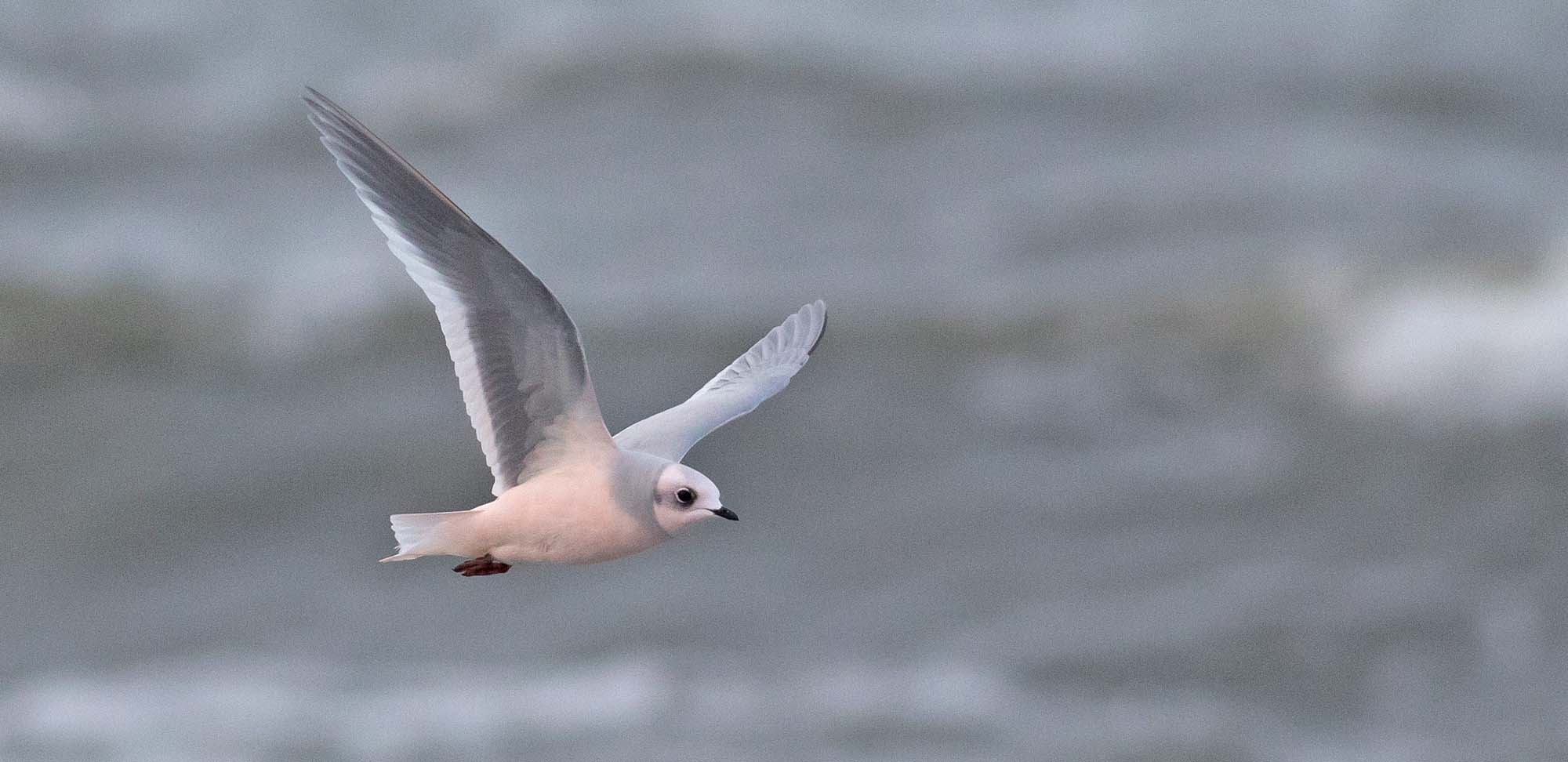
Few birds in North America elicited more excitement when they were discovered than the diminutive, elegant Ross's Gull of the High Arctic. To see one in the Lower 48, you need to be lucky; you just can't predict when one will show up. This is often not so in Barrow in early October! Barrow is unique in many ways, and one of the more fascinating attributes of this remote site on the Arctic Ocean shore is its geographic position for witnessing the annual fall migration of Ross's Gulls. It's a migration phenomenon first witnessed here in the late 1800s and first documented in the 1970s and 1980s. Every fall, beginning in late September, the majority of the world's Ross's Gulls migrate past this remote outpost from the Chukchi Sea in Arctic Russia to the Beaufort Sea in Arctic Alaska. Strong onshore winds often bring these Ross's Gulls within view of land, and local conditions sometimes force thousands of these beautiful, pink-plumaged birds close to shore, where some may linger to feed in the coastal habitats at this season. Small numbers of these gulls would be memorable enough, but the chance to bear witness to the spectacle of large numbers (we saw 1,200+ on one of our tours!) is one of the great opportunities of North American birding.
During this fall season, Barrow offers the chance for other prizes as well, including Spectacled, King, and Common eiders, Yellow-billed Loon, Snowy Owl, and perhaps even an Ivory Gull or a Polar Bear.
In 2026 we precede our proven Barrow trip ("Part Two") with a journey to St. Paul Island to search for Asian migrants that stop at this lonely Bering Sea outpost, with peak sightings in late September and early October. Although the avian prizes vary from year to year, some of the exciting birds that have appeared regularly during this date range in recent years have included Tufted Duck, Common Snipe, Jack Snipe, Gray-tailed Tattler, Gyrfalcon, Brambling, Eurasian Skylark, Eyebrowed Thrush, Siberian Accentor, Olive-backed Pipit, Common Rosefinch, McKay's Bunting, Rustic Bunting, and Little Bunting. There has also been a who's who of even rarer "megas" that have shown up on the island at least once during this time span, including multiple first sightings of these species in North America, so you really never know what lies around the next corner there! Some of these rarer birds have included Hawfinch, Eurasian Bullfinch, Mottled Petrel, Marsh Sandpiper, Spotted Redshank, Gray Wagtail, Wood Warbler, Yellow-browed Warbler, Common Redstart, and Pallas's Rosefinch, to mention just a few. We'll check multiple migrant hotspots each day, and we'll walk through dense patches of island vegetation to look for skulking passerines and wetland birds. There is a very large pool of potential migrants we have a chance to encounter, though we will certainly not see all of them--that dynamic is part of the fun of this treasure hunt. The suite of species fluctuates substantially year-to-year and is strongly weather-dependent, but we stand an excellent chance of finding some Old World and Arctic goodies during our visit to this special island. The seabird show of the summer months is not at full force during early October, but we should find Short-tailed Shearwaters, both Tufted and Horned Puffins, and Red-faced Cormorants. We stand a reasonable chance of finding Red-legged Kittiwakes and other Alaskan-breeding alcids during our travels around the island. Bring your jacket, hat, boots, and adventurous spirit, and join us for this special Alaskan quest!
Select the KEY INFO tab or click here for our itinerary plus space requests, status, fees, limits, and guides for any departure.
Client comment
"An excellent group experience. Everyone was very nice and compatible. Field Guides has so many great guides, but I have to rate Doug Gochfeld as one of the best I have ever met. It was such a pleasure to be on a birding trip with him! Office service was excellent." M.P., ALASKA FALL GOLDMINE
Other Tours in USA
ALASKA: NO PLACE LIKE NOMEALASKA: THE GREAT LAND
ARIZONA MINDFUL BIRDING RETREAT: SEDONA
ARIZONA NIGHTBIRDS & MORE
ARIZONA WINTER SPECIALTIES
ARIZONA'S SECOND SPRING
ARIZONA: BIRDING THE BORDER
BIRDING THE DAKOTAS: Prairies, Black Hills & Badlands
COLORADO GROUSE
FALL FOR CAPE MAY
FLORIDA: Mangroves & Migrants
HAWAII
LOUISIANA: YELLOW RAILS & CRAWFISH TAILS
MAINE IN FALL: Seabirds & Coastal Migrants
MICHIGAN: GREAT LAKES GRANDEUR
NEBRASKA: CRANES WITH CORY
NEW MEXICO: Birding the Land of Enchantment
NORTHERN ARIZONA'S CANYONS & CONDOR
OREGON: From the Coast to the Cascades
SLICE OF CALIFORNIA: Seabirds to Sierra
SOUTH TEXAS RARITIES
SPRING IN CAPE MAY
TEXAS COAST MIGRATION SPECTACLE